Recuperative Care Is the Inflection Point
Recuperative Care Is the Inflection Point
We keep treating recuperative care too narrowly.
Too often, it is seen as a short-term discharge option. A brief landing place after the hospital before someone is handed off again into a system that is already too fragmented to carry them well. That framing misses the real opportunity.
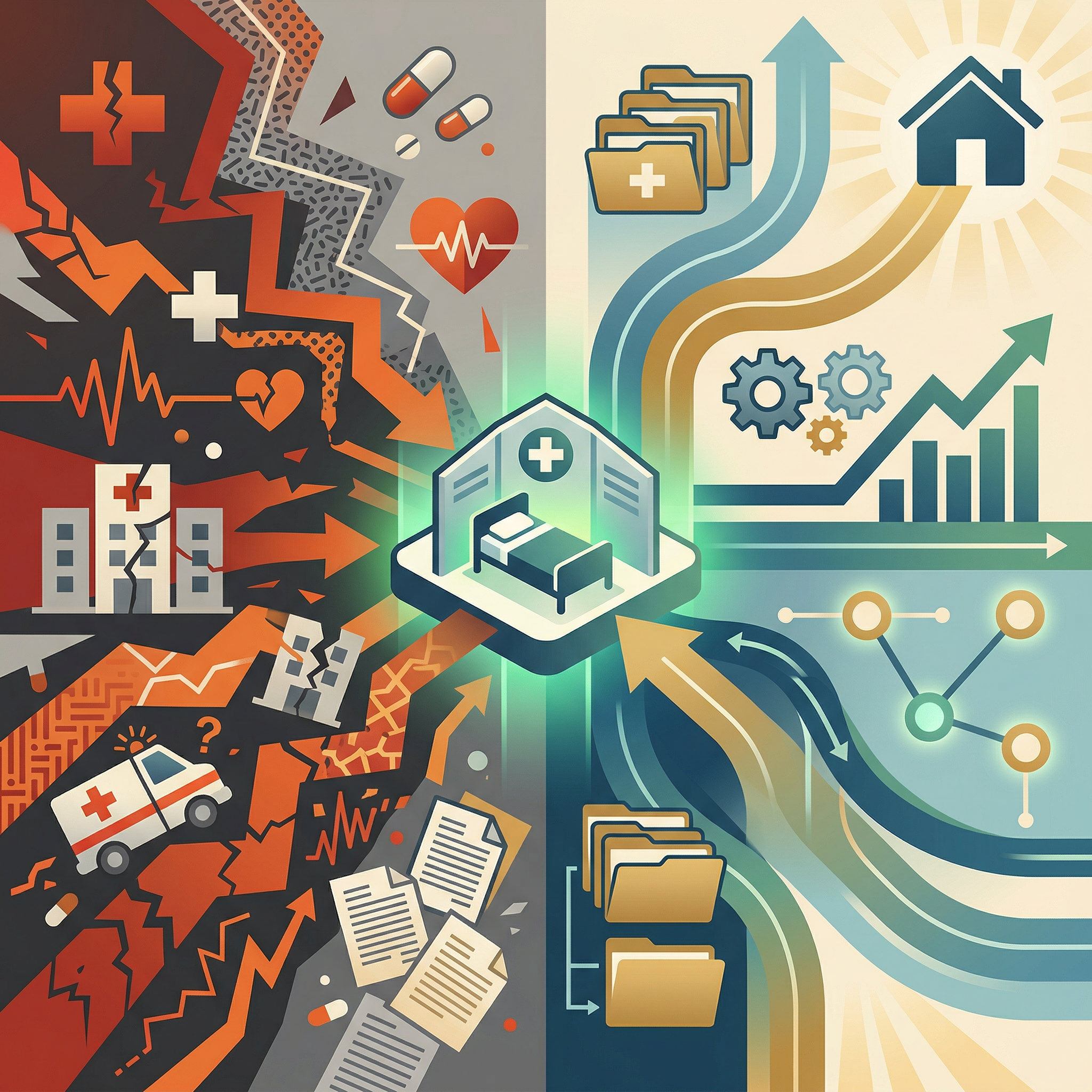
Recuperative care should not be viewed as the end of discharge. It should be viewed as the point where the system finally has a real chance to work.
Why? Because recuperative care creates something rare. Time with access.
A person is off the street, medically stabilizing, reachable, and no longer moving through pure crisis. That window matters. It is where Enhanced Care Management can engage in a meaningful way. It is where Housing Navigation has a real shot. It is where clinical follow-up can be layered in through a Federally Qualified Health Center without turning recuperative care into something it is not.
That part matters.
Recuperative care does not need to become clinical to become more effective. Non-clinical should not mean passive. With the right structure, it can still be the place where medication continuity, documentation, benefits readiness, care coordination, and next-step planning come together in a way that actually moves someone forward.
That is where the real value is.
Not just in the bed, but in the capture. In the ability to stabilize someone long enough to route them correctly. To interim housing. To permanent housing. To a skilled nursing facility when needed. Or in some cases, away from a skilled nursing facility if the right support exists around them.
That is also why the savings are too often missed.
If recuperative care is only measured as a single service line, the real economics disappear. The savings are in fewer failed discharges, fewer avoidable emergency department returns, less waste between handoffs, better transitions, and more appropriate placement. That is not theory. That is what happens when systems stop working against themselves.
We spend a lot of time talking about homelessness as if the answer is simply more programs. I do not think that is the real problem. The problem is that too few of those programs are built to work in sequence.
A stronger recuperative care model can help change that.
It can be the point where healthcare, housing, navigation, and accountability finally meet in one place long enough to create real forward movement instead of more drift.
If we want better outcomes, we need to stop treating recuperative care like a temporary stop and start treating it like what it can be.
The inflection point.